

Chopsticks are an essential part of the Japanese dining table. When did they come to Japan and how did they become so ingrained in the culture? Learning about the history of chopsticks may help you love them even more.
When and where did chopsticks originate?
The oldest known chopsticks to date are bronze ones excavated from the Yin Ruins, an ancient Chinese ruin. Of course, it is possible that chopsticks made from plants such as wood or bamboo also existed in the same period, but wood and bamboo rot easily, so even if they were excavated, it would be difficult to determine whether they were chopsticks or just pieces of wood.
In China, there are several references to chopsticks, such as "Kaizi" and "Zenzi." Among these, the character for "zashi" appeared during the Warring States period. As you can see, the character uses a bamboo crown. Therefore, it can be said that chopsticks made from bamboo were widespread during this period.

In China, a trend gradually emerged where knives, which were only used in kitchens and slaughterhouses, were not brought to the dining table. This was due to the proverb of Mencius, "A gentleman stays away from the kitchen." As a result, food began to be prepared in advance in the kitchen in bite-sized pieces and served at the table, which is thought to be why chopsticks became so popular.
A cutting board is necessary for cutting ingredients, so it makes sense that cultural spheres that use chopsticks and those that regularly use cutting boards are generally the same.
At the time, China had a great influence on neighboring countries, and the influence was also strong culturally. The people of the surrounding areas did not want to be seen as barbarians by the Chinese Han people, so the culture of using chopsticks spread to other countries.
The history of chopsticks in Japan
Chopsticks are something we use every day. But what is the history of chopsticks in Japan? Tweezers-like "folded chopsticks" made by bending a single bamboo stalk have been found in ruins from the end of the Yayoi period. However, it is believed that these were used as ritual implements for serving food to the gods in religious ceremonies and rituals. After all, it was common to eat with your hands at the time.
The Japanese Kojiki states that chopsticks were already in existence in the Age of the Gods, while the Chinese Wei Zhi Wajin Den states that people in Yamataikoku ( Japan around the 3rd century) ate with their hands. This historical contradiction would be resolved if chopsticks were used as ritual implements.
It was during the Asuka and Nara periods that people began using chopsticks when eating. Prince Shotoku is said to have been the first to adopt the chopstick eating system within the Imperial Court. The Asuka and Nara periods were a time of active exchange with China. In 607 , Ono no Imoko and his companions, who were envoys to the Sui Dynasty, brought back a set of chopsticks and spoons along with dining etiquette.
The dining etiquette that Prince Shotoku introduced to the Imperial Court gradually spread to the general public, and the culture of using chopsticks while eating became widespread.
There is evidence that chopsticks made from cedar or cypress were used during the Nara period, and in the Kamakura period, chopsticks began to be lacquered along with tableware. In the mid-Edo period, eating out became popular, and disposable chopsticks were made from surplus wood.
Among the 30 % of countries in the world that have a chopstick culture, Japan can be said to have a unique history, as it is the only country that has established etiquette for eating using only chopsticks.
Think back to when you eat Japanese food. You drink the soup by putting your mouth directly to the bowl, and eat the toppings with chopsticks. Japan is the only country where this style of eating directly to the bowl is accepted. Even though chopsticks are a part of Japanese culture, you will rarely see this style in other countries.
Another unique feature of Japan is having your own personal chopsticks. Of course, not all households have this, but Japan has a culture of having specific chopsticks and bowls.
<Extra Edition> Chopsticks used around the world

Japan has a unique chopstick culture, but you may be wondering how chopsticks are used in other countries. Here is a simple introduction to how chopsticks are used in other countries.
In China, the standard combination is cylindrical or square chopsticks paired with a ceramic spoon (sanrenge). Chopsticks are used for side dishes, and the spoon is used for rice and soup.
In Korea, chopsticks are used for side dishes, and spoons for rice and soup. Unlike in China, most chopsticks are made of metal.
Vietnam is famous for its noodle diet. Sometimes a knife is used in addition to the chopsticks and spoon combination. The chopsticks used are rectangular, similar to those used in China. Perhaps because of the noodle diet, lacquered chopsticks are not preferred, and wooden or resin chopsticks are used.
summary
So far, we have explained the origins of chopsticks and the history of chopsticks in Japan. Although things may change, in countries with chopstick cultures other than Japan, the basic set seems to be chopsticks and a spoon. It can be said that Japan's unique chopstick culture has been possible thanks to its unique climate and the connections between its people.
When you are looking for a new pair of chopsticks, remember what we have told you here. We are sure you will find a great pair.
Reference URL
The History and Culture of Chopsticks
What is the history, origin and origin of chopsticks?
3 recommended products from Hashiya Mansaku!
|

|

|
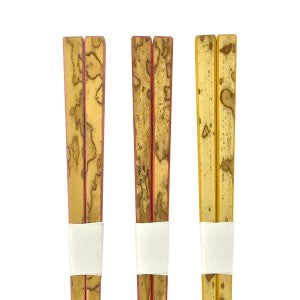
| [Mansaku Selection] Misono Chopsticks, Sakura, Yamabuki, and Safflower | [Mansaku Select] Kaiseki Chopsticks | Solid Ash Wood Chopsticks - Jura |


