

First of all, what is a Japanese cat?
Japanese cats are a breed unique to Japan
 Japanese cats are a breed unique to Japan. They are the most commonly kept cat breed in Japan and are the familiar faces with slightly rounded cheeks, straight noses, medium builds, thick limbs, and short fur. However, purebred Japanese cats are rare these days. This is due to the large number of Western cats, such as Siamese and American Shorthairs, that were brought to Japan after World War II. In Japan, cats were allowed to roam free to hunt mice, and until recently, it was common for cats to be kept outdoors. Western cats brought to Japan were also kept in the same way, leading to repeated crossbreeding between Japanese and Western cats, and eventually purebred Japanese cats became almost unheard of. In other words, the cats we see today that are called Japanese cats are, strictly speaking, hybrids that have inherited Japanese cat blood.
It has a short tail, which is rare in the West.
 One of the defining characteristics of Japanese cats is the length and shape of their tails. Very short tails, cut at the base only, or curled tails like pom-poms are relatively common in Japan, but are rare in Europe and the US, and have captivated many cat lovers. In 1968, an American breeder brought a pair of Japanese cats, a male and a female, across the Pacific, which led to the export of over 100 Japanese cats to the US, where planned breeding took place. In 1976, the name "Japanese Bobtail" was given to short-tailed cats that originated from the Japanese cat, and they were recognized as a breed.
The curled tail commonly seen in Japanese cats
 Another tail shape unique to Japanese cats is the "crooked tail," where the tip of the tail is bent like a key. One theory is that this crooked tail originated from cats brought to Nagasaki from Southeast Asia during the Edo period. Cats with crooked tails are common in Nagasaki Prefecture, and survey results have shown that cats with bent tails account for approximately 80% of the total.
Main Japanese cat breeds and their characteristics
The appeal of Japanese cats is the wide variety of coat colors they come in. Here are some of the most common coat colors.white cat
 This is a cat whose fur is a solid white color with no other colors mixed in. Its pure white body gives it an air of elegance and grace, and when exposed to sunlight it sparkles and shines. White cats are intelligent and clever. In the wild, white cats are very conspicuous, and it is difficult for them to survive without being attacked by predators. For this reason, white cats have to think hard about how to survive, and one theory is that they naturally acquired this intelligence.
Click here for a list of White Cat merchandise
Black Cat
 This refers to a cat with solid black fur. Sometimes there is a little bit of white fur mixed in around the chest or belly. Black cats are not conspicuous, but they give the viewer an impression of nobility and strength. Black cats have a very affectionate personality, which is the complete opposite of their tough appearance. Of course, there are some black cats that are shy and timid, but once they get used to people, many of them seem to rub against you and become affectionate. Because they are completely black, they give off an unapproachable vibe, but in fact, they love to be around people.
Click here for a list of black cat goods
tabby cat
Tabby cats are cats with stripes, and are divided into kijitora, brown tabby, and mackerel tabby. A brown tabby cat has black stripes on a brown background, and its protective coloring makes it suitable for hiding. Tabby cats are friendly and affectionate, and are said to be particularly curious among Japanese cats. It is thought that the reason why tabby cats are so curious is because the stripes act as camouflage, making them ideal for hunting prey. Brown tabby cats
 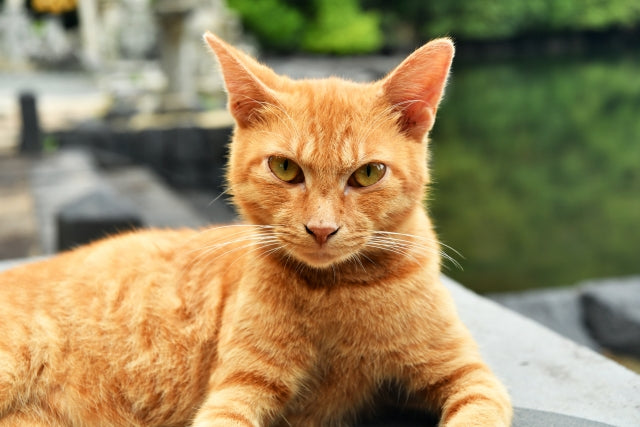 Brown tabby cats are characterized by a bright orange-red base color with dark red stripes, and because they are warm colors, they give off a feeling of warmth. Brown tabby cats tend to be very affectionate. They adore their owners like mother cats and love to cling to them. They are quiet even when placed on the owner's lap or picked up, and at night they like to sleep in the same futon as their owner. Brown tabby cats
  Cats with a grayish silver base color and black stripes are called brown tabby cats. Brown tabby cats are said to have a quieter and more calm personality than brown tabby cats. This is thought to be related to the fact that brown tabby cats were born from crossbreeding with other cat breeds. The incorporation of genes from various cat breeds has likely changed the cat's originally wild personality into a more calm one.
Rusty cat
 Sabi cats are cats with a mosaic-like blend of black and red fur. The proportions of black and red and the way the colors are mixed vary from cat to cat, making them a delight to the eye and a work of art. They are sometimes called "tortoiseshell" because they appear a vibrant tortoiseshell color when exposed to sunlight. Sabi cats have a plain appearance, but their personalities, perhaps reflecting their appearance, are also timid and quiet. They are not very assertive and tend to stay quiet. Due to their personality, they prefer quiet environments and become stressed when there is a lot of noise. Loud noises or shouts will frighten them and they will run away, so try not to scare them.
Tabby cat
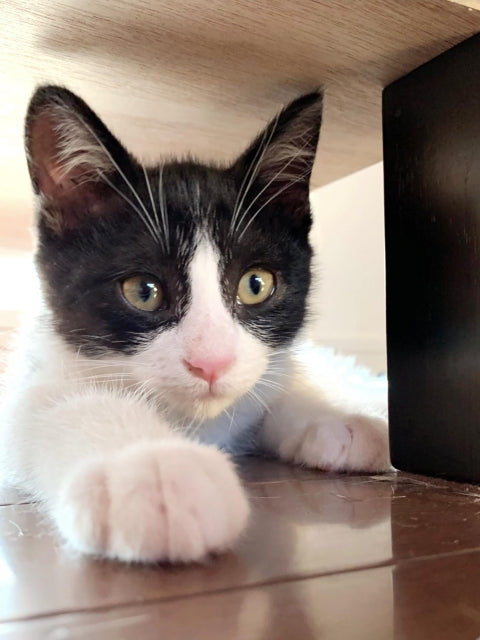 Tabby cats are generally cats with two coat colors: white and black. Cats with a lot of white hair are sometimes called black-and-white, while cats with a lot of black hair are sometimes called black-and-white. Tabby cats are a representative coat color combination for Japanese cats, and each one is unique, with cats with dotted black spots, cats that look like they're wearing a tuxedo, and cats that look like they're wearing white socks. Tabby cats' personalities vary depending on the proportion of the colors, with black-and-white cats said to be a bit mischievous, curious, and gluttonous, while black-and-white cats are said to be docile and wary.
calico cat
 Calico cats are cats with three coat colors: black, red, and white. The proportion of each color varies from cat to cat. While some cats have an even distribution of all three colors, others have mostly white fur with only a few black and red patches on the head and tail, making them look almost completely white. Calico cats exude a sense of rustic warmth, often appearing in paintings and illustrations of them lying on verandas or curled up in a kotatsu. Due to genetic factors, most calico cats are female, and males are rarely seen. Calico cats' personalities can be summed up in one word: princess-like, with distinct likes and dislikes and a very laid-back attitude. While they may seem affectionate and docile, they can also display a smart and assertive side. This may be due to the fact that most calico cats are female. Mother cats try to protect their kittens, so seeing them hissing and threatening out of caution may give the impression that calico cats are strong-willed.
summary
Japanese cats are a breed unique to Japan. They have distinctive physical features, such as slightly rounded faces with prominent cheeks and straight noses, medium builds, thick limbs, and short hair. They also have short tails, which are rare in the West, and are relatively common, with bent tails. Another attractive feature of Japanese cats is the wide variety of coat colors, including white, black, tabby, tortoiseshell, spotted, and calico, each with its own distinct personality.Cat goods and accessories
Neko Masshigura sells cat goods and accessories! Be sure to check it out!
