![The Ichi: A comprehensive online store for Japanese fashion | [Reconstruction Pottery Project] Characteristics of Kutani ware](https://cdn.shopify.com/s/files/1/0551/9897/4030/files/kutani_1.jpg)
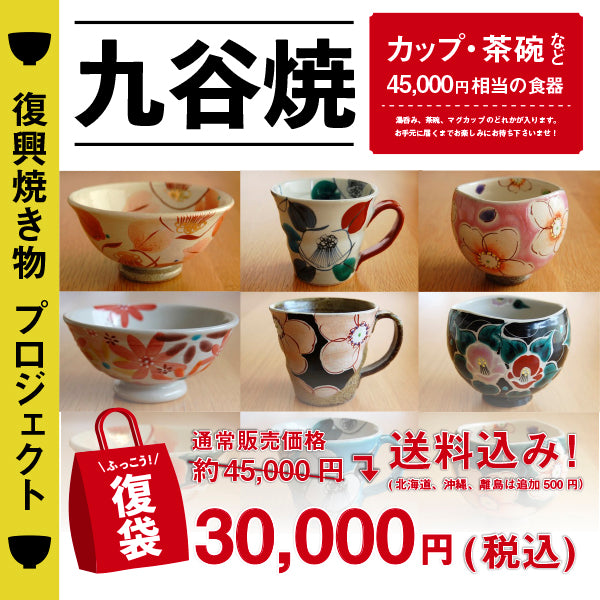
When you hear the word "pottery," many people probably think it's expensive and hesitate to buy it... But surprisingly, if you happen to buy it, it turns out to be "good pottery"...! Among them, "Kutani ware" may be surprisingly hidden! We would like to introduce you to "Kutani ware."
Characteristics of Kutani ware
![The Ichi: A comprehensive online store for Japanese fashion | [Reconstruction Pottery Project] Characteristics of Kutani ware](https://cdn.shopify.com/s/files/1/0551/9897/4030/files/kutani_2.jpg)
The origins of Kutani ware date back to around 1655, when a potter who had learned the techniques in Arita brought back to Japan and began producing it in Kutani Village, Ishikawa Prefecture (near present-day Yamanaka Onsen in Kaga City). By firing the ware twice, the colorful and vibrant colors are very appealing.
Kutani ware style
blue hand
It is characterized by the use of mainly cool colors, such as deep green, yellow, navy blue, and purple, and the absence of red. Also, due to the unique coloring of Kutani ware, it is also called "Blue Kutani," and is a style from the late Edo period.
Akae and Kinrande
In contrast to Aode, this style makes use of the properties of red paint, which is resistant to bleeding, and since the background is painted red, the patterns must be drawn using different thicknesses of color, so it is a style that requires high skill. Also, a style in which vessels covered with small patterns are further painted with gold is called "Kinrande" within Akae, and it has been so called in Japan because the color scheme resembles the style of gold brocade fabric.
Iroe (colored painting)
Unlike Aode, Akae, and Kinrande, this style uses five colors: red, green, purple, ultramarine, and yellow, known as the "Kutani Five Colors." It is a coloring technique in which the five colors are freely applied thickly over lines drawn with a pigment called Gosu.
Conclusion
The impact of the new coronavirus has hit tourist destinations across the country hard, including producers who sell their products to these destinations.
Traditional crafts that have been cherished throughout Japan's long history may soon be going out.
In order to keep that flame alive, we at The Ichi have prepared Hasami ware restoration bags as part of our Pottery Restoration Project.
Please support us!