

What comes to mind when you hear the word "Japanese umbrella"?
It's red, full of bones, and has no handle...
I think many people have this kind of image in mind.
So, what exactly is the difference between Japanese umbrellas and Western umbrellas?
The characteristics of the Japanese umbrella are actually filled with the Japanese sense of consideration for others.
In this column, I would like to introduce you to Japanese umbrellas.
 A Japanese umbrella is an umbrella made from bamboo and washi paper.
In Japan, it has a history of being used not only to protect from the rain, but also as a talisman and sunshade .
In the Edo period, umbrellas were also used as proof of status and lord-servant relationships, depending on the patterns and crests used on them , and they have been used with various meanings.
Because the fabric is made from washi paper, it tends to have an image of being fragile, but the glue hardens with rain and makes the umbrella stronger, so surprisingly, the more you use it, the better it will last. However, it is still a delicate umbrella, so it needs to be dried thoroughly and meticulously cared for .
A Japanese umbrella is an umbrella made from bamboo and washi paper.
In Japan, it has a history of being used not only to protect from the rain, but also as a talisman and sunshade .
In the Edo period, umbrellas were also used as proof of status and lord-servant relationships, depending on the patterns and crests used on them , and they have been used with various meanings.
Because the fabric is made from washi paper, it tends to have an image of being fragile, but the glue hardens with rain and makes the umbrella stronger, so surprisingly, the more you use it, the better it will last. However, it is still a delicate umbrella, so it needs to be dried thoroughly and meticulously cared for .
 As you might imagine, Japanese umbrellas have many ribs. Why?
Western umbrellas became lighter to make them more portable, and the number of ribs in umbrellas was typically eight .
In Japan, umbrellas were customarily carried by an attendant, and there was no culture of carrying them with one's hands. Also, because Japanese umbrellas are made from washi paper, the number of ribs typically ranged from 16 to 24 to increase their strength .
Because of these differences in customs, Western umbrellas win when it comes to portability. However, there is another reason for the number of ribs in Japanese umbrellas: consideration for others. The Western umbrellas we use today are folded with the ribs on the inside and the fabric on the outside. Have you ever had the experience of getting your clothes wet when putting away a wet umbrella? On the other hand, because Japanese umbrellas have more ribs, the ribs are on the outside and the wet fabric is on the inside.
It contains a small act of consideration that not only protects you but also those around you from getting wet .
As you might imagine, Japanese umbrellas have many ribs. Why?
Western umbrellas became lighter to make them more portable, and the number of ribs in umbrellas was typically eight .
In Japan, umbrellas were customarily carried by an attendant, and there was no culture of carrying them with one's hands. Also, because Japanese umbrellas are made from washi paper, the number of ribs typically ranged from 16 to 24 to increase their strength .
Because of these differences in customs, Western umbrellas win when it comes to portability. However, there is another reason for the number of ribs in Japanese umbrellas: consideration for others. The Western umbrellas we use today are folded with the ribs on the inside and the fabric on the outside. Have you ever had the experience of getting your clothes wet when putting away a wet umbrella? On the other hand, because Japanese umbrellas have more ribs, the ribs are on the outside and the wet fabric is on the inside.
It contains a small act of consideration that not only protects you but also those around you from getting wet .
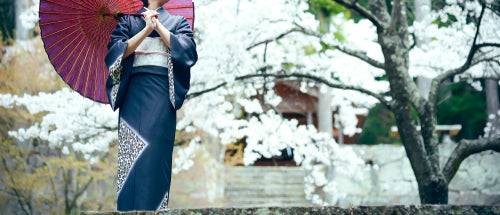 Japanese umbrellas are made to be at least one size larger than modern umbrellas (Western umbrellas).
As mentioned earlier, Japanese umbrellas were made to be large because there was no concept of them being portable.
This is to increase the amount of space that stays dry, but it is made especially large to prevent Japanese kimonos and obi from getting wet .
Japanese umbrellas are made to be at least one size larger than modern umbrellas (Western umbrellas).
As mentioned earlier, Japanese umbrellas were made to be large because there was no concept of them being portable.
This is to increase the amount of space that stays dry, but it is made especially large to prevent Japanese kimonos and obi from getting wet .
 Japanese umbrellas are difficult to repair because the ribs and fabric are glued together and connected with thread, and once they are torn, they may have to be dismantled.
Because of the many steps involved, it took a long time and was not suitable for mass production, so its popularity declined.
Instead, Western-style umbrellas, which require less labor and labour, have become popular in Japan as modern rain gear.
However, in modern times, with the advancement of technology, lightweight and durable materials such as carbon and fiberglass have been used for the ribs, resulting in the creation of hybrid umbrellas that combine the benefits of both Japanese and Western umbrellas, remaining light and strong even with a large number of ribs .
Although Japanese umbrellas and Western umbrellas have the same shape, their merits lie in their differences.
Both are different and both are good, but if you can appreciate the appeal of umbrellas, you'll surely be able to enjoy even a slightly depressing rainy day.
Japanese umbrellas are difficult to repair because the ribs and fabric are glued together and connected with thread, and once they are torn, they may have to be dismantled.
Because of the many steps involved, it took a long time and was not suitable for mass production, so its popularity declined.
Instead, Western-style umbrellas, which require less labor and labour, have become popular in Japan as modern rain gear.
However, in modern times, with the advancement of technology, lightweight and durable materials such as carbon and fiberglass have been used for the ribs, resulting in the creation of hybrid umbrellas that combine the benefits of both Japanese and Western umbrellas, remaining light and strong even with a large number of ribs .
Although Japanese umbrellas and Western umbrellas have the same shape, their merits lie in their differences.
Both are different and both are good, but if you can appreciate the appeal of umbrellas, you'll surely be able to enjoy even a slightly depressing rainy day.
 What did you think? We'd like to introduce you to some stylish umbrellas that will let you experience the beauty of Japanese umbrellas!
Why not find your favorite umbrella to accompany you in the rain?
Hokusai Graphics here
What did you think? We'd like to introduce you to some stylish umbrellas that will let you experience the beauty of Japanese umbrellas!
Why not find your favorite umbrella to accompany you in the rain?
Hokusai Graphics here
Definition of Japanese umbrella
A Japanese umbrella is an umbrella made from bamboo and washi paper.
In Japan, it has a history of being used not only to protect from the rain, but also as a talisman and sunshade .
In the Edo period, umbrellas were also used as proof of status and lord-servant relationships, depending on the patterns and crests used on them , and they have been used with various meanings.
Because the fabric is made from washi paper, it tends to have an image of being fragile, but the glue hardens with rain and makes the umbrella stronger, so surprisingly, the more you use it, the better it will last. However, it is still a delicate umbrella, so it needs to be dried thoroughly and meticulously cared for .
The thoughtfulness that goes into Japanese umbrellas
As you might imagine, Japanese umbrellas have many ribs. Why?
Western umbrellas became lighter to make them more portable, and the number of ribs in umbrellas was typically eight .
In Japan, umbrellas were customarily carried by an attendant, and there was no culture of carrying them with one's hands. Also, because Japanese umbrellas are made from washi paper, the number of ribs typically ranged from 16 to 24 to increase their strength .
Because of these differences in customs, Western umbrellas win when it comes to portability. However, there is another reason for the number of ribs in Japanese umbrellas: consideration for others. The Western umbrellas we use today are folded with the ribs on the inside and the fabric on the outside. Have you ever had the experience of getting your clothes wet when putting away a wet umbrella? On the other hand, because Japanese umbrellas have more ribs, the ribs are on the outside and the wet fabric is on the inside.
It contains a small act of consideration that not only protects you but also those around you from getting wet .
Why are Japanese umbrellas so big?
Japanese umbrellas are made to be at least one size larger than modern umbrellas (Western umbrellas).
As mentioned earlier, Japanese umbrellas were made to be large because there was no concept of them being portable.
This is to increase the amount of space that stays dry, but it is made especially large to prevent Japanese kimonos and obi from getting wet .
A "hybrid" of Japanese and Western umbrellas
Japanese umbrellas are difficult to repair because the ribs and fabric are glued together and connected with thread, and once they are torn, they may have to be dismantled.
Because of the many steps involved, it took a long time and was not suitable for mass production, so its popularity declined.
Instead, Western-style umbrellas, which require less labor and labour, have become popular in Japan as modern rain gear.
However, in modern times, with the advancement of technology, lightweight and durable materials such as carbon and fiberglass have been used for the ribs, resulting in the creation of hybrid umbrellas that combine the benefits of both Japanese and Western umbrellas, remaining light and strong even with a large number of ribs .
Although Japanese umbrellas and Western umbrellas have the same shape, their merits lie in their differences.
Both are different and both are good, but if you can appreciate the appeal of umbrellas, you'll surely be able to enjoy even a slightly depressing rainy day.
summary
What did you think? We'd like to introduce you to some stylish umbrellas that will let you experience the beauty of Japanese umbrellas!
Why not find your favorite umbrella to accompany you in the rain?
Hokusai Graphics here


![[The Ichi(座市)]編集部のオススメ!今週の再入荷商品](http://wargo.live/cdn/shop/collections/shopify_{width}x.jpg?v=1678940879)
![[The Ichi(座市)]編集部のオススメ!父の日特集](http://wargo.live/cdn/shop/collections/feature_banner_fathers_day_{width}x.jpg?v=1749084448)


![[The Ichi(座市)]編集部のオススメ!松竹歌舞伎座オフィシャルグッズ特集](http://wargo.live/cdn/shop/collections/Shopify_97c58244-3a49-4f15-a896-bc46ebf2144c_{width}x.jpg?v=1678948660)